


If you’re planning an elopement in California, understanding the legal requirements is an essential part of the process. Marriage laws vary by state, and California has specific rules around marriage licenses, witnesses, officiants, and permits that couples need to know before their wedding day.
The good news is that California is one of the more straightforward states to get married in—especially for couples traveling in from out of state.
This guide walks through California elopement laws in clear, practical terms, so you know exactly what’s required to get legally married and can focus on planning a day that feels intentional and relaxed.
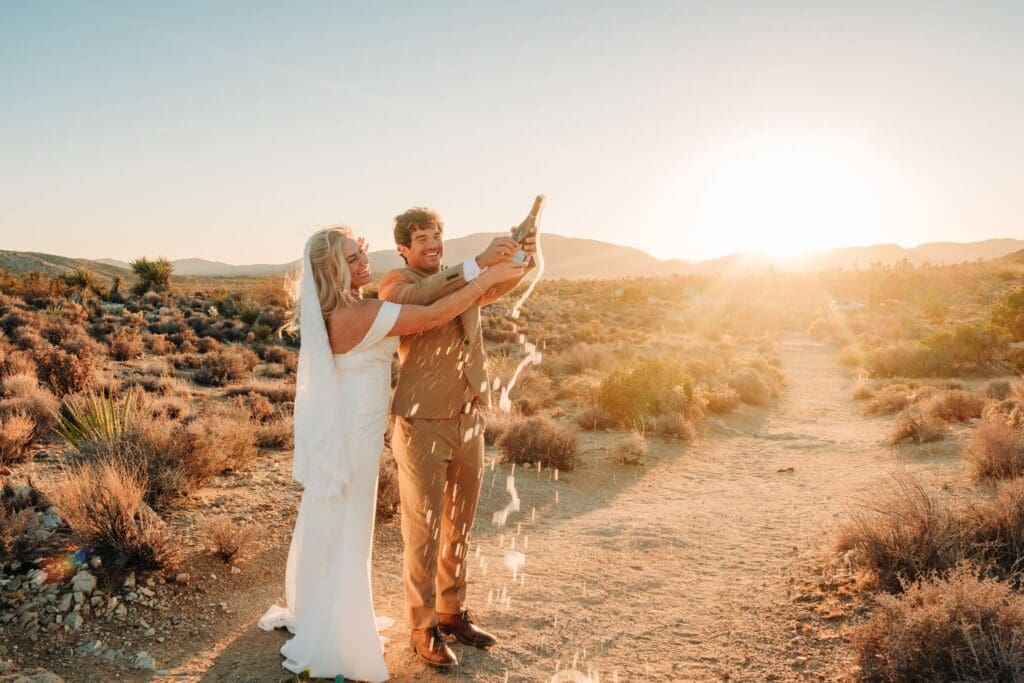
How to Get a Marriage License for an Elopement in California
To legally elope in California, you’ll need to obtain a marriage license.
There is no waiting period in California, which means you can get married the same day you receive your license. There is also no residency requirement—you do not need to live in California to get married here.
Marriage licenses are issued by county clerk offices throughout the state. Both partners must appear in person and bring:
- A government-issued photo ID (driver’s license or passport)
- Payment for the license fee (typically $60–$100, depending on the county)
If either partner has been married previously, some counties may request proof of divorce or a death certificate for a former spouse.
It’s always a good idea to check the specific requirements and accepted payment methods with the county clerk’s office ahead of time.
Public vs. Confidential Marriage Licenses in California
California offers two types of marriage licenses, and choosing the right one matters.
Public Marriage License
- The most common option
- Requires at least one witness
- Becomes part of the public record
Confidential Marriage License
- Available only to couples who are already living together
- Does not require witnesses
- The marriage record is not publicly accessible
If you choose a confidential marriage license, you’ll need to sign an affidavit stating that you live together. The ceremony must take place in California, and the license must be filed in the same county where it was issued.
Do You Need an Officiant to Elope in California?
Yes—California requires an officiant for a legal marriage ceremony, but you have flexibility in who can perform the ceremony.
Valid officiants in California include:
- Religious officials (ministers, rabbis, priests, etc.)
- Judges or justices of the peace
- Friends or family members who become ordained online
California does allow self-solemnization, but only in specific cases for members of religious societies without clergy. In those situations, two witnesses are required to sign the marriage certificate.
For most couples, having a friend, family member, or professional officiant is the simplest route.
Do You Need a Permit to Elope in California?
In many cases, yes.
California’s public lands—including national parks, state parks, and many beaches—often require permits for wedding ceremonies, even for very small elopements.
Permit requirements vary by location, but common ceremony sites that require permits include:
- National parks such as Joshua Tree or Yosemite
- State parks and protected natural areas
- Certain public beaches and open spaces
Permits help protect the land and ensure that ceremonies follow local guidelines. While it may feel tempting to skip the paperwork, obtaining the proper permit is an important part of planning a responsible elopement in California.
Do You Need a Witness to Elope in California?
Witness requirements depend on the type of marriage license you choose.
- Public marriage licenses require at least one witness (up to two may sign)
- Confidential marriage licenses do not require witnesses
- Self-solemnized marriages require two witnesses
Witnesses must be present during the ceremony and sign the marriage certificate.

How Long a California Marriage License Is Valid
A California marriage license is valid for 90 days from the date it is issued.
If the marriage ceremony does not take place and the license is not filed within that timeframe, the license expires and you’ll need to apply again.
Bonus Tips for California Elopements
- Marriage laws are statewide, but permit rules vary by location, so always check with the specific park or city office
- If you’re eloping in a national or state park, apply for permits early—some locations limit the number of ceremonies per day
- If logistics or paperwork feel overwhelming, working with an experienced elopement planner or photographer can simplify the process
Planning a California Elopement
Once the legal requirements are handled, the rest of your elopement can be shaped around experience, pacing, and presence.
California offers an incredible range of landscapes—from deserts and coastlines to forests and mountains—but the most meaningful elopements are built on clarity, not complexity.
Understanding California elopement laws allows you to plan confidently and focus on creating a wedding day that feels grounded, intentional, and true to you.

More Resources:


Do you know how much it costs for a confidential elopement?
Can you give me a ballpark figure?
Thank you.