


A grounded, experience-first approach to eloping in Joshua Tree, without the noise.
Joshua Tree has a way of slowing everything down. The landscape is open, the pace is quieter, and the desert doesn’t ask you to perform — it asks you to be present. For couples drawn to eloping here, it’s rarely about spectacle. It’s about creating space. Space to simplify, to breathe, and to focus on what actually matters.
A Joshua Tree elopement isn’t about chasing an “epic” moment or turning the day into a highlight reel. It’s about intention. Whether that looks like a slow morning at your Airbnb, a simple ceremony tucked among the rocks, or ending the day watching the light fade across the desert, the meaning here lives in the in-between.
This guide is here to help you understand what planning a Joshua Tree elopement can look like — without turning it into a production, a checklist, or a photoshoot.

Everything you Need to Know to Plan Your Joshua Tree Elopement
- What a Joshua Tree Elopement Can Look Like
- Joshua Tree Wedding Locations
- How to Get to Joshua Tree
- Timing Your Joshua Tree Elopement
- Best Time of Year for a Joshua Tree Elopement
- Joshua Tree Elopement Permits
- Legalities
- Where to Stay for Your Joshua Tree Elopement
- Joshua Tree Wedding Photography

What a Joshua Tree Elopement Can Look Like
There’s no single right way to elope in Joshua Tree. Some couples plan a full, slow day that unfolds from morning to night. Others keep things minimal — a short ceremony, a few intentional hours together, and then they’re off to celebrate however they want.
What these days tend to share is pacing. There’s room to wake up without rushing. Time to settle in instead of bouncing between locations. Space to be together without an audience, expectations, or pressure to fill every moment.
Joshua Tree naturally supports this kind of experience. The quiet, the scale of the landscape, and the way light moves through the park all encourage presence over performance. The day doesn’t need to be busy to be meaningful — it just needs to feel like yours.
Planning Considerations for Eloping in Joshua Tree
Joshua Tree is a protected landscape, and eloping here comes with a few realities worth understanding early on. Planning with these in mind helps the day feel calm and grounded rather than stressful or rushed.
Permits & Park Guidelines:
All ceremonies and photography within Joshua Tree National Park require a Special Use Permit, even for very small gatherings. Permits are issued through the park and should be secured as soon as you have a date and general location in mind.
Because park rules can change, it’s important to review the most current guidelines directly through the National Park Service.
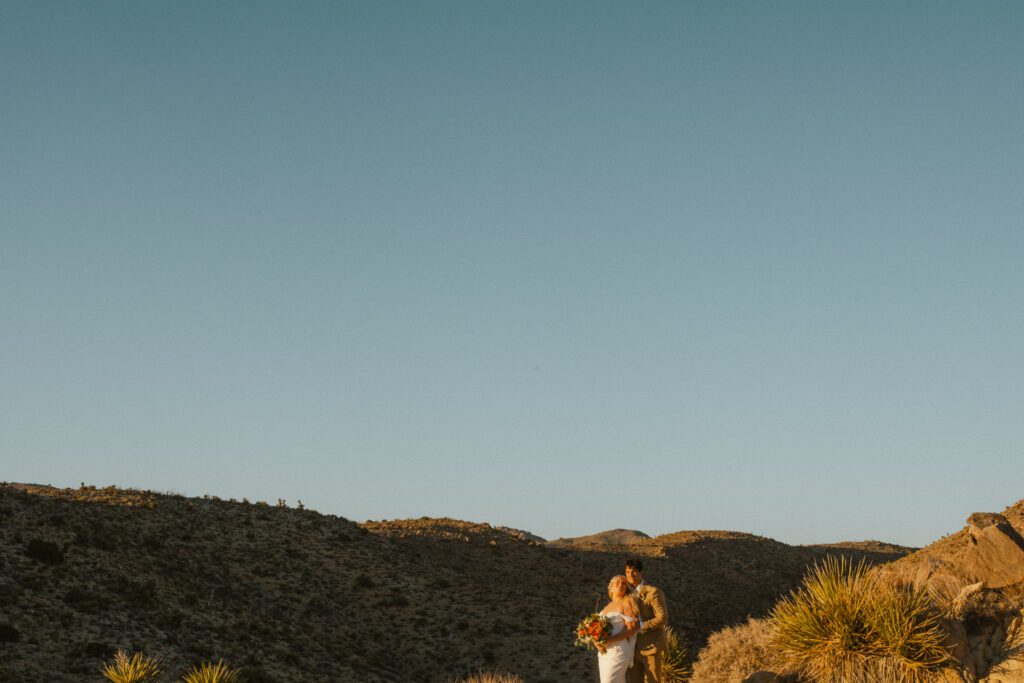
Joshua Tree Wedding Locations
One of the most common questions couples have is where they’re actually allowed to get married inside the park. Joshua Tree National Park only permits ceremonies in specific, designated locations — each with its own guidelines around group size and vehicles.
Rather than choosing a spot based purely on how it looks in photos, it’s worth considering privacy, accessibility, and how you want the ceremony to feel.
I’ve photographed and scouted every approved ceremony location in the park and put together a dedicated resource with photos, notes, and considerations for each one.
👉 Where to Get Married in Joshua Tree National Park
How to Get to Joshua Tree
While Joshua Tree is a national park, the towns of Joshua Tree, Yucca Valley, and Twentynine Palms sit just outside the park boundaries. Having a car is essential — both for getting around and for accessing ceremony locations.
Flying vs. Driving to Joshua Tree
The closest airport is Palm Springs, about an hour from the park. Many couples also fly into Los Angeles, San Diego, or Las Vegas and drive in. Larger airports often offer more flight options and better pricing.
Driving through the desert can be part of the experience, especially if you’re arriving from Southern California or Nevada and want to ease into the landscape.
Joshua Tree Park Entrances
You can reach Joshua Tree National Park via Interstate 10 or California Highway 62. There are three park entrances:
- West Entrance: located off Highway 62, closest to downtown Joshua Tree.
- North Entrance: off Highway 62, in Twentynine Palms, about 30 minutes from Joshua Tree.
- South Entrance: 25 miles south of Indio, off Interstate 10.
Which entrance you use will depend on where you’re staying and where your ceremony location is within the park.
Timing Your Joshua Tree Elopement
Timing plays a huge role in how your elopement feels — not just visually, but physically and emotionally.
Sunrise, Sunset, and Crowds
Sunrise and sunset tend to offer the most comfortable temperatures and the most privacy, especially in popular areas of the park. These windows are often quieter and feel more intimate, allowing the day to unfold without interruption.
Some couples choose to meet for sunrise, take a break during the heat of the day, and reconnect at sunset. Others plan a shorter window around one part of the day. Both approaches can work beautifully.
Weekdays vs. Weekends
Weekdays are consistently less crowded than weekends. Planning your elopement between Monday and Thursday can make a noticeable difference in privacy and overall ease, especially during peak seasons.

Best Time of Year for a Joshua Tree Elopement
Joshua Tree’s desert climate shapes how and when elopements work best. Fall through spring generally offers the most comfortable conditions, while summer brings intense heat that requires thoughtful pacing and timing.
Rather than searching for a “perfect” month, planning works best when it’s aligned with what you can comfortably enjoy and how you want to spend your time. Each season brings its own rhythm — cooler mornings in winter, wildflowers in spring, quiet nights and incredible stargazing in summer.

Joshua Tree Elopement Permit
All ceremonies and photography within Joshua Tree National Park require a Special Use Permit. This applies even to very small elopements with just the two of you, an officiant, and a photographer.
Permits are issued by the park and currently carry a $120 application fee. Applications can be submitted up to one year in advance, and it’s best to apply as soon as you have a date and general location in mind so there’s plenty of time for processing.
Joshua Tree is a protected landscape, and eloping here comes with a responsibility to care for the environment. Leave No Trace principles apply to all ceremonies, which means setups must be minimal, temporary, and respectful of the land.
Simple, free-standing elements like a small table, a rug or runner, live flowers, water coolers, or battery-powered candles are typically permitted. Items that introduce debris, wildlife disruption, or environmental damage — such as drones, dried florals, confetti, smoke bombs, bubbles, or animals — are not allowed.
Even with an approved permit, each vehicle entering the park must still pay the standard entrance fee, which is currently $30 per car and valid for seven days.
For the most up-to-date guidelines, I always recommend reviewing the official park policies directly.
How to Get Married in Joshua Tree
Along with securing a park permit, eloping in Joshua Tree means making sure your marriage is legally recognized in California.
Marriage licenses are issued by the state of California and can be obtained through any county clerk’s office. For couples eloping in Joshua Tree, the San Bernardino County clerk is the closest option, though you’re not required to apply there specifically. Many couples complete most of the process online before arriving.
On the day of your elopement, you’ll need an officiant and one witness present to sign the license. Once the signed paperwork is returned and processed, your marriage is official.
Because legal requirements can vary slightly by county — and because most couples don’t want to spend their planning energy decoding paperwork — I’ve put together a separate resource that walks through the process clearly and simply.
👉 California Elopement Laws: A Quick Guide to Getting Married

Where to Stay for Your Joshua Tree Elopement
Some couples prefer small desert inns or boutique hotels that are close to the park, while others opt for Airbnbs that reflect their personal style — whether that’s minimalist, architectural, cozy, or completely off-grid. Finding a place that fits your vibe is part of the fun and helps shape how the day feels.
If you’re looking for hotel or inn options near the park, places like 29 Palms Inn, RESET Hotel, Field Station Joshua Tree, The Ramsey 29, and Hotel Wren are all fantastic places to stay.
Many couples also choose Airbnb for the flexibility and privacy it offers. Searching for a place that supports the rhythm of your day — rather than just how it looks in photos — often leads to the best experience.

Joshua Tree Wedding Photography
Your elopement in Joshua Tree isn’t just about being in a beautiful place — it’s about how the day unfolds and how it feels to be there together.
My approach to photographing elopements here is rooted in documentary storytelling. I’m not interested in staging moments or turning your wedding day into a performance. Instead, I focus on documenting what’s actually happening — the quiet pauses, the movement, the laughter, and the in-between moments that give the day its meaning.
I offer guidance where it’s helpful — around timing, locations, and flow — and step back when things are unfolding naturally. The goal isn’t to manufacture an experience, but to create space for one and document it honestly.
Joshua Tree elopements work best when the day is allowed to breathe. My role is to support that rhythm, not override it.
Are you ready to plan your Joshua Tree elopement?
If you’re considering a Joshua Tree elopement and want a day that feels grounded, intentional, and true to you, I’d love to talk through what that could look like.
You don’t need to have every detail figured out — just a sense of what you want to protect about your day.

Comments