


A slower, more grounded way to experience the day you’ve been planning
One of the most common things couples say after their wedding day is: it went by so fast.
You plan for months—sometimes years—only to feel like the day itself passes in a blur. Not because it wasn’t meaningful, but because there was so much happening at once. So many expectations. So many transitions. So many moments pulling your attention in different directions.
Being fully present on your wedding or elopement day isn’t about doing more. It’s about creating the conditions that allow you to actually experience what’s already there.
This isn’t a guide to perfection or productivity. It’s an invitation to slow down, soften your grip on expectations, and let your wedding day be something you live—not something you manage.
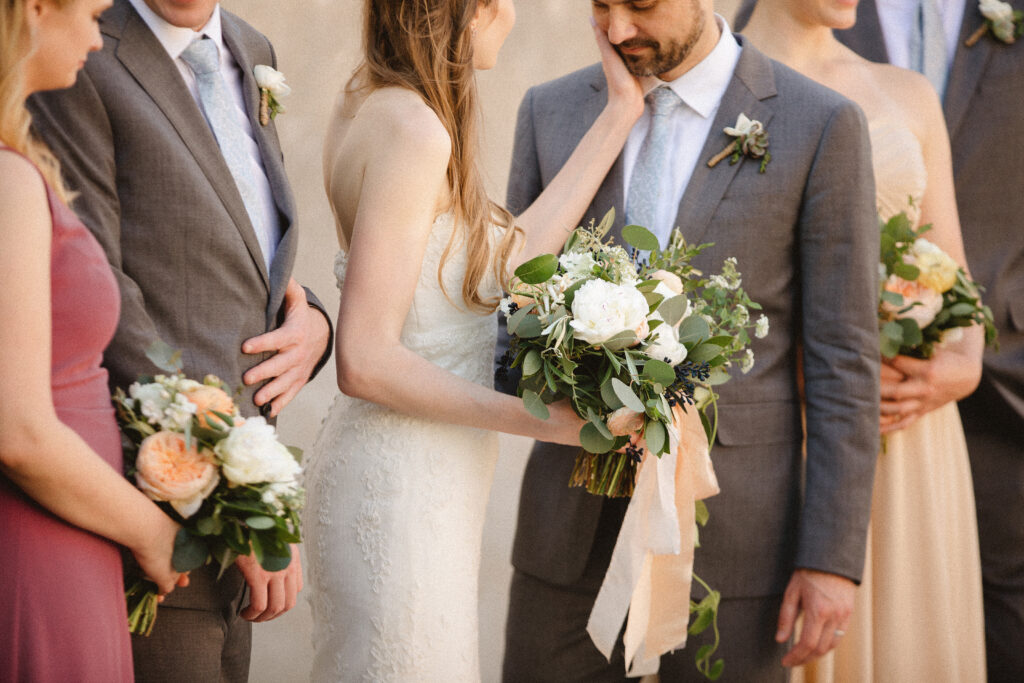
Presence Starts Before the Wedding Day Ever Begins
The tone you set early shapes how the whole day feels
Presence doesn’t magically appear when you put on your dress or step into your ceremony. It’s built in the quiet moments before anything officially starts.
How you spend the morning of your wedding matters. Not because it needs to look a certain way, but because it sets the emotional pace for everything that follows.
Starting the day slowly—whether that means a quiet walk, a shared coffee, stretching, journaling, or simply sitting together without phones—creates a sense of grounding that carries through the rest of the day. It reminds your nervous system that this isn’t something to rush through or perform for. It’s something to experience.
When you give yourself permission to begin calmly, the rest of the day has room to unfold without feeling frantic or compressed.
Letting Go of the Shot List Creates Space to Be Here
Real moments don’t happen when you’re waiting for them
One of the quickest ways to pull yourself out of the moment is to mentally track what should be happening.
Shot lists, Pinterest boards, and must-have moments can quietly turn your attention outward—toward what’s missing, what’s next, or whether something has already happened yet. Presence lives in the opposite direction.
When you trust your photographer to document what unfolds naturally, you free yourself from having to monitor the day. You don’t need to remember to smile a certain way or recreate a moment that already passed. You get to stay focused on your partner, your people, and what you’re actually feeling.
The moments that matter most are rarely the ones you plan. They’re the ones that happen when you stop watching for them.
Creating Space for Emotion Instead of Rushing Through It
Meaning needs room to breathe
Weddings—especially intimate ones—can be emotionally dense. There’s joy, anticipation, vulnerability, nostalgia, relief, excitement. All of it deserves space.
Building small pockets of pause into your day allows you to actually feel what’s happening instead of moving straight through it. That might look like a quiet moment together before the ceremony, a few minutes alone after vows, or intentional transitions between locations rather than rushing from one thing to the next.
You don’t need to fill every moment. Some of the most grounding memories come from stillness—the pause before you walk in, the breath after you say “we did it,” the silence that settles once the ceremony ends.
Presence deepens when the day isn’t over-structured.
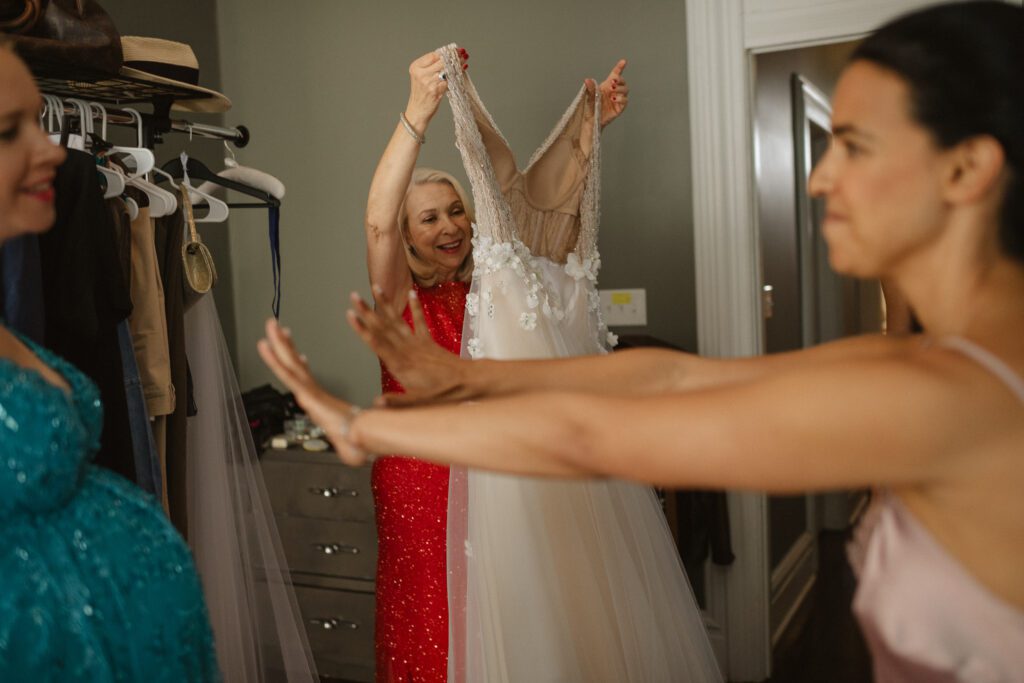
Choosing Experiences Over Expectations
Your wedding day doesn’t need to follow a script to be meaningful
One of the biggest gifts of weddings and elopements today is choice. You get to decide how the day is spent, who it’s shared with, and what actually matters to you.
When couples prioritize experience over tradition for tradition’s sake, the day often feels more honest and less performative. That might mean planning a simple ceremony and lingering over a meal, taking a walk together instead of rushing into portraits, or building in time to reflect instead of stacking events back to back.
A timeline that reflects who you are—rather than what weddings are “supposed” to look like—makes it easier to stay present. You’re not constantly shifting roles or checking boxes. You’re just moving through the day as yourselves.
Navigating Stress Without Letting It Take Over
Presence isn’t about control—it’s about response
Even the most intentional wedding days come with unpredictability. Weather changes. Plans shift. Emotions run high.
Being present doesn’t mean nothing goes wrong. It means you have tools to come back to the moment when things feel overwhelming.
Sometimes that’s as simple as squeezing your partner’s hand, taking a deep breath together, or sharing a look that says, we’re okay. Sometimes it’s choosing to laugh instead of resist. Often, it’s remembering that the commitment you’re making matters more than the conditions surrounding it.
When you let go of needing the day to be perfect, you make room for it to be real.
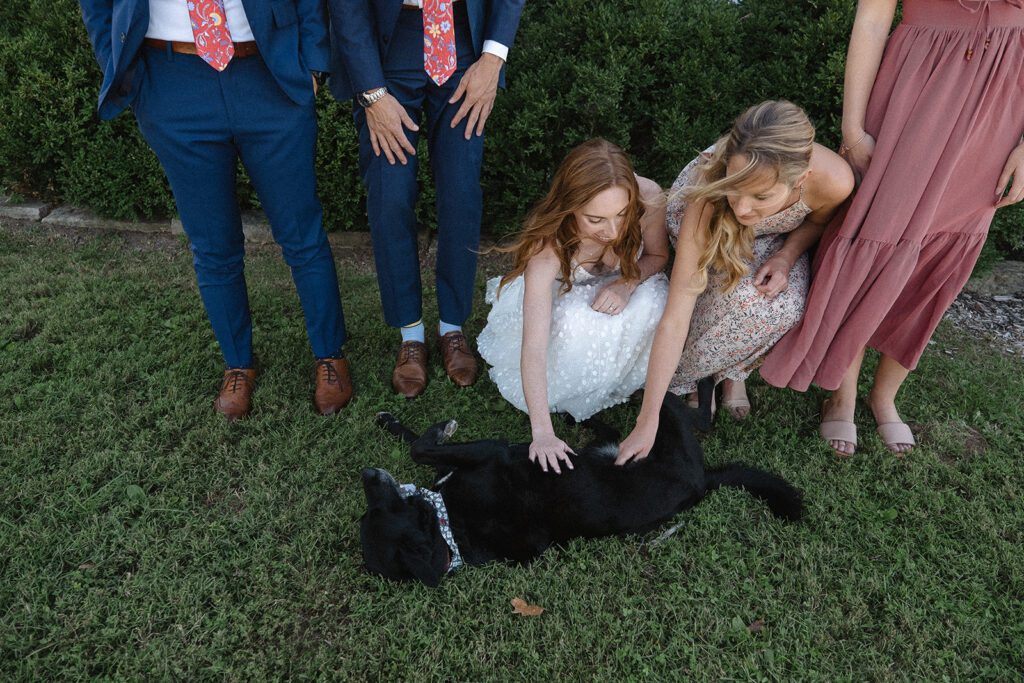
Carrying Presence Beyond the Wedding Day
Reflection turns moments into memories
Presence doesn’t end when the day is over.
Taking time afterward to reflect—whether through writing, quiet conversation, or revisiting your photos—helps anchor the experience in your memory. It allows you to notice what stood out, what moved you, and what you want to carry forward into your marriage.
The goal isn’t to hold onto the day forever. It’s to let it live inside you in a way that feels complete.
Presence Over Perfection
Your wedding or elopement isn’t about how it looks from the outside. It’s about how it feels while you’re in it.
Slowing down.
Letting go.
Trusting the moment.
That’s how presence happens.
And when you choose an approach—both in planning and photography—that values experience over performance, you give yourself the chance to remember your wedding day not just through images, but through the way it truly felt to be there.


